From Crisis to Calm: Your First Step Into Detox
Starting detox can feel scary, especially if you are unsure what will happen during medical clearance and intake. You might be worried about pain, how long it will take, or if people will judge you. The truth is, this first step is about keeping you safe, comfortable, and heard.
Medical clearance and intake are required before entering a detox program in Pennsylvania so a medical team can understand your health, your substance use, and any risks. This helps them create a plan that fits you, not just your symptoms. The process is private, respectful, and focused on helping you stabilize as gently as possible.
At Pennsylvania Recovery Center in Chester County, we guide people through drug and alcohol evaluations in Pennsylvania, connect them with detox programs across the state, and support them with outpatient care after detox. Our goal is to move you from crisis to calm, one clear step at a time.
How Drug and Alcohol Evaluations in Pennsylvania Work
A drug and alcohol evaluation is usually your first big step. It is a structured conversation with a trained professional about where you are and what you need. It is not a test you pass or fail, and it is not about shaming anyone.
During an evaluation, you can expect questions about things like:
- What substances you use, how often, and how much
- Any past attempts to quit or cut back
- Your mental health history, including anxiety, depression, or trauma
- Medical problems such as pain, heart issues, or diabetes
- Your living situation, family support, and daily stress
This information helps decide the safest level of care. Some people need medical detox because they are at risk for serious withdrawal. Others may be better served by partial hospitalization (PHP), intensive outpatient (IOP), traditional outpatient, or sometimes a higher medical level of care if there are serious health concerns.
Logistically, most evaluations:
- Take about an hour, sometimes a bit longer if your history is complex
- Can be done in person or, in some cases, by phone or video
- Are kept confidential under privacy laws
At Pennsylvania Recovery Center, we use these evaluations to match you with detox programs across Pennsylvania when needed and then plan what should come after detox so you are not left on your own.
What Happens During Medical Clearance and Vitals Checks
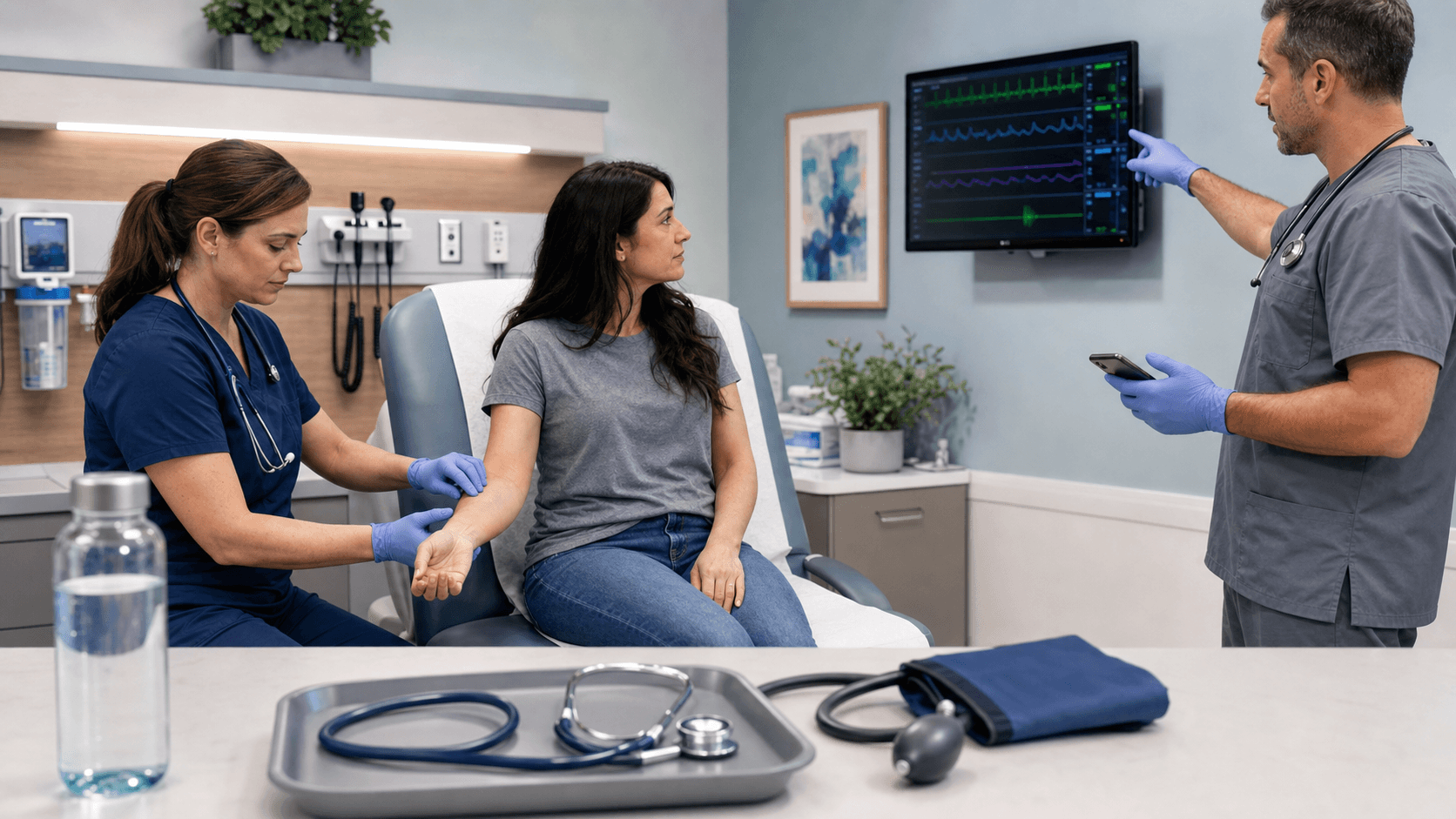
Once a detox program has a basic idea of your needs, medical clearance makes sure your body is ready for withdrawal management. This usually starts when you arrive at the detox center or sometimes at a hospital if there are more serious medical concerns.
Medical staff will typically:
- Review your medical history, including surgeries, hospital stays, and chronic illnesses
- Go over all current medications, vitamins, and supplements
- Ask about allergies to medicines or foods
- Check for any past withdrawals, seizures, hallucinations, or blackouts
They will check your vital signs when you arrive and throughout your stay. This usually includes:
- Blood pressure
- Heart rate and rhythm
- Temperature
- Oxygen level
- Breathing rate
These numbers matter because withdrawal can raise your heart rate, affect blood pressure, and change your breathing. By following your vitals, nurses and doctors can adjust medications and step in early if something starts to shift.
You may also have:
- A basic physical exam
- An EKG to look at your heart if you have heart issues or take certain medications
- A pregnancy test if you could be pregnant
Pregnant people, older adults, and anyone with serious health problems may need more detailed clearance, sometimes in a hospital setting or a detox that is set up for complex medical care. This is not to slow you down; it is to make sure detox helps instead of causing problems.
Labs, Toxicology Screens, and Withdrawal Risk Scoring
Lab work is another key part of medical clearance. It helps the team see how your organs are working and which medications are safest for you during detox.
Common labs include:
- Complete blood count (CBC) to look at red and white blood cells and platelets
- Metabolic panel to check kidney and liver function
- Electrolytes like sodium and potassium, which can shift during withdrawal
- Blood alcohol level if you have been drinking recently
- Tests for infections or chronic health conditions that might affect treatment
Toxicology screens are usually done with urine, sometimes with blood. They show what substances are currently in your system, including alcohol, opioids, benzodiazepines, stimulants, and others. This is not about catching you in a lie. It helps the team:
- Confirm mixed substance use
- Predict what type of withdrawal you may have
- Choose the right medicines and watch times more closely
During detox, nurses often use withdrawal risk scoring tools. Two common ones are:
- CIWA for alcohol withdrawal
- COWS for opioid withdrawal
These tools score things like:
- Nausea, sweating, and tremors
- Anxiety, restlessness, and trouble sleeping
- Body aches, goosebumps, or stomach cramps
- Changes in blood pressure and heart rate
Scores help staff know when to give or change medications, and they lower the risk of serious problems like seizures, delirium tremens in alcohol withdrawal, or severe opioid withdrawal symptoms.
Insurance Verification, Cost Questions, and Detox Timeline
One of the most stressful parts for many people is worry about insurance and cost. Before admission, most detox programs will verify your benefits so you know what is covered.
You can make this smoother by having:
- Your photo ID
- Your insurance card
- Your employer information, if insurance is through your job
The detox program or a referring provider will usually:
- Call your insurance company
- Check if the detox is in-network or out-of-network
- Ask if pre-authorization is needed and how many days might be covered at first
You may hear terms like deductible, copay, or coinsurance. If your plan is limited or out-of-network, programs like Pennsylvania Recovery Center can help you look at other options, including self-pay or, when available, state-funded resources.
The basic timeline often looks like this:
- First call: same-day or next-day assessment is common
- Evaluation and clearance: can be done the same day in many cases, but may be longer if labs or extra tests are needed
- Admission to detox: sometimes same day, other times within a day or two, depending on bed availability
Busy times, like holiday weekends or peak travel seasons, can slow down placement because more people seek help and beds can fill up quickly. Starting the process early, before symptoms get severe, can give you more choices and a smoother path into care.
From Intake to Ongoing Care: Start Detox and Plan What Comes Next
Once medical clearance and intake are complete, detox can begin in a safer, more controlled way. Medications, monitoring, and rest help your body get through withdrawal. But detox is only the first step. Without follow-up care, the risk of relapse stays high.
A good plan moves you from detox into:
- Partial hospitalization (PHP) if you need daily structure and medical support
- Intensive outpatient (IOP) if you need several treatment sessions per week while starting to return to daily life
- Traditional outpatient counseling if your symptoms are more stable
At Pennsylvania Recovery Center, we help connect people leaving detox with these next levels of care, along with ongoing drug and alcohol evaluations in Pennsylvania. We also help people access therapy, family education, and peer support groups so they are not doing recovery alone.
When triggers increase, such as during warm weather social events or long holiday weekends, having a plan already in place can make a big difference. Medical clearance and intake are not just hoops to jump through; they are the foundation for a safer detox and a more stable path forward.
Take a Confident First Step Toward Recovery Today
If you or someone you care about is struggling, our professional drug and alcohol evaluations in Pennsylvania can help you understand what kind of support is truly needed. At Pennsylvania Recovery Center, we take the time to listen, answer your questions, and guide you toward an individualized plan. Reach out to our team today to schedule an evaluation or contact us with any questions so you do not have to face this alone.
Frequently Asked Questions
What is medical clearance before detox in Pennsylvania?
Medical clearance is a safety check that reviews your health, substance use history, and withdrawal risks before detox begins. It helps the medical team choose the right setting and medications so withdrawal can be managed as safely as possible.
How long does a drug and alcohol evaluation usually take in Pennsylvania?
Most drug and alcohol evaluations take about an hour, sometimes longer if your history is complex. They can often be done in person and sometimes by phone or video, and they are confidential under privacy laws.
What vital signs are checked during detox intake and why do they matter?
Staff typically check blood pressure, heart rate, temperature, oxygen level, and breathing rate when you arrive and throughout detox. These numbers can change during withdrawal, so tracking them helps the team adjust care quickly if problems develop.
What labs or tests are common during detox intake?
Detox intake often includes bloodwork to see how your organs are working and a toxicology screen to understand what substances may be in your system. You may also get an EKG if there are heart concerns, and a pregnancy test if pregnancy is possible.
What is the difference between an evaluation and medical clearance for detox?
An evaluation is a structured conversation about your substance use, mental health, medical history, and support system to decide the safest level of care. Medical clearance is the clinical check, including vitals and often labs, to confirm your body can go through withdrawal management safely.